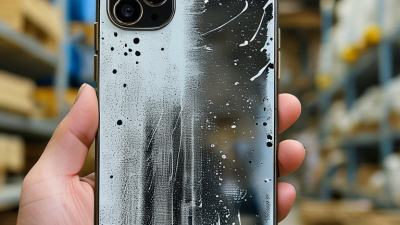
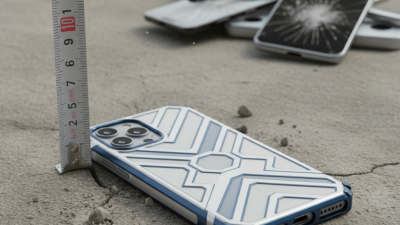
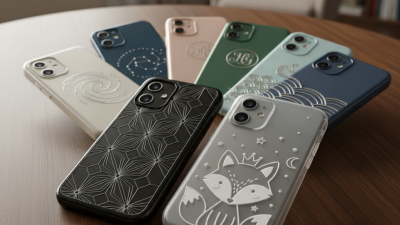
China has become a major sourcing hub for customized mobile accessories, including engraved phone cases. This guide examines ten manufacturers serving domestic and international buyers. The selection considers production experience, engraving quality, material options, customization capacity, and communication standards. It also looks beyond attractive product photos. Factory evidence matters.
A reliable supplier should explain its materials clearly. Common choices include polycarbonate, TPU, aluminum, leather, and wood. Each surface creates a different engraving result. Fine lettering may appear sharp on coated metal but softer on textured leather. Sample testing is essential. It can reveal uneven depth, blurred edges, weak adhesion, or inaccurate camera openings.
Quality control should cover more than appearance. Buyers should ask about drop testing, surface durability, packaging, and order inspection procedures. Export experience can also reduce misunderstandings about labeling, documentation, and delivery schedules. Certifications may support credibility, but they should be verified rather than accepted without questions. That is where many comparisons become too confident.
Real production conditions can change.
Some manufacturers may excel at small batches, while others require larger minimum orders. A supplier with advanced equipment may still struggle with design revisions or delayed responses. This overview therefore presents practical strengths and possible limitations, not absolute guarantees. Readers should request current samples, factory details, pricing, and written specifications before choosing a partner. The best manufacturer is not always the cheapest or most famous. It is the one that consistently turns approved artwork into durable, precise, and market-ready products.
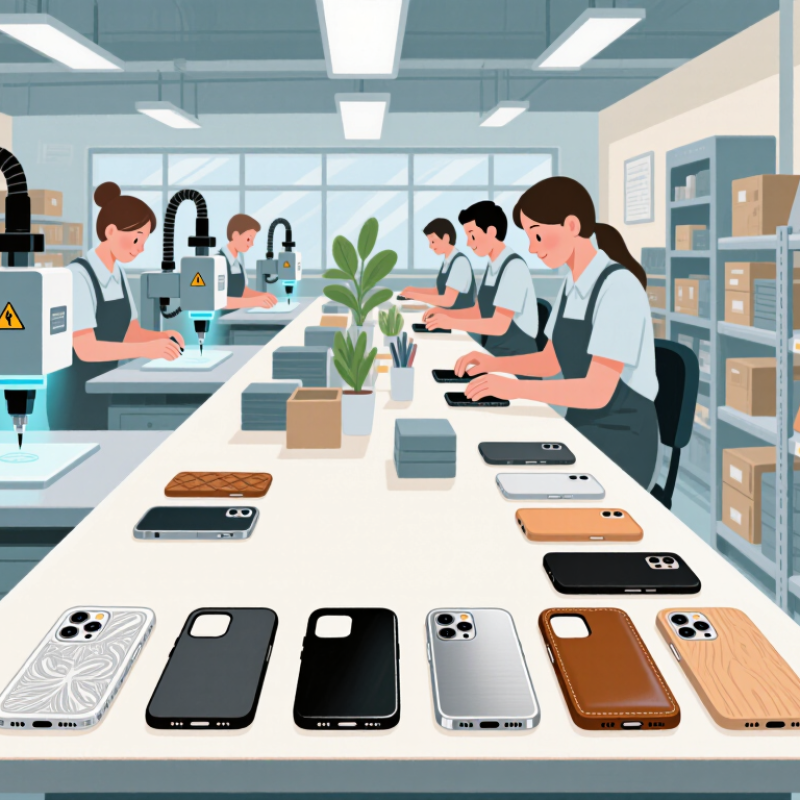
An engraved phone case carries a design cut into its surface, rather than printed only on top. Manufacturers commonly use polycarbonate, TPU, leather, or aluminum-backed materials. A CO2 or fiber laser removes a colored coating and reveals the layer beneath. Rotary engraving can create deeper grooves on rigid panels. The process begins with a digital vector file. Operators then test depth, speed, and heat on sample pieces. Too much heat may warp TPU or leave dark edges. Small errors remain visible.
IDC reported about 1.17 billion smartphone shipments worldwide in 2023. GSMA Intelligence counted roughly 4.7 billion mobile internet users during the same period. These figures indicate a large, continually changing market for protective accessories. They do not prove every engraved case will sell. Fit testing still matters more than decoration. Manufacturers should check camera clearance, button pressure, wireless charging, abrasion resistance, and drop performance. A reliable production line measures engraving position with templates or vision equipment. It also records material batches and rejects uneven surfaces. In practical factory inspections, dust is an underestimated problem. It can settle inside laser marks and make pale designs look dirty. Independent testing should verify coating adhesion and surface durability. The process is precise, but not perfect. Humidity, inconsistent sheets, and rushed calibration can affect the final case.
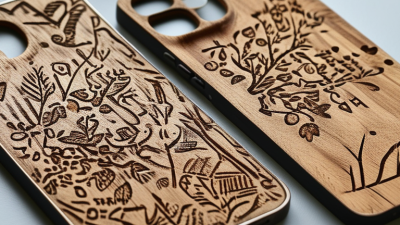
Engraved phone cases are customized cases with text, logos, patterns, or artwork permanently removed or marked on the surface by laser or rotary engraving. The chart shows representative thicknesses commonly used for major case materials; the plotted values are the midpoints of the stated typical ranges.
During production, the case is cleaned, positioned in an engraving fixture, marked with a digital design, engraved at controlled power and speed, and then inspected. TPU and polycarbonate are commonly used for flexible and rigid protective shells, while leather and wood veneer are used for decorative premium designs.
Evaluating China’s engraved phone case manufacturers requires more than comparing catalog photos. A factory should show its workshop, engraving equipment, material specifications, and quality records. Ask whether it uses PC, TPU, leather, or recycled materials, and request test reports for each version. A sharp logo means little if the case yellows, cracks, or loses alignment after a week.
Order samples first. Inspect the engraving under side lighting. Lines should have even depth, clean corners, and no burned edges. Check button response, camera clearance, wireless charging performance, and fit on different phone models. Rub the surface with a dry cloth, then test it after light moisture and pocket friction. These checks reveal more than a sales presentation. Looks can deceive. Production batches may use different settings or operators.
Reliable manufacturers document incoming material checks, first-piece approval, in-process inspection, and final packing. Request written tolerances for engraving position, color, dimensions, and defect rates. Confirm capacity during busy seasons, realistic lead times, replacement procedures, and secure artwork handling. A responsible supplier should explain its factory location and subcontracting practices clearly. Certifications deserve verification, not blind trust. Price is not proof. Unusually low pricing may hide thinner materials or rushed inspection. Keep test records and compare later batches against the approved sample.
China’s Top 10 Engraved Phone Case Manufacturers should be evaluated through production evidence, not attractive catalog images. The selection considers engraving accuracy, material safety, order flexibility, export experience, and quality control. Factories using laser or CNC systems can produce sharper initials, dates, and geometric patterns. However, surface depth still varies across leather, aluminum, TPU, and polycarbonate cases.
Market demand supports this focus. IDC recorded about 1.24 billion smartphone shipments worldwide in 2024, creating a large replacement-accessory market. Grand View Research also estimates steady growth in the global mobile phone accessories sector through 2030. These figures do not measure engraved cases directly. That gap matters. Niche demand should not be confused with total accessory demand.
The ten manufacturers in this China-focused review are compared by sample consistency, engraving tolerance, production capacity, packaging quality, and communication speed. A reliable supplier should provide close-up samples, material specifications, and inspection records before mass production. Ask for color rub tests. Ask again after shipping.
In practical testing, a phone case should fit buttons cleanly, protect camera edges, and keep engraving readable under ordinary handling. Some suppliers advertise low minimum orders but struggle with repeated designs. Others deliver excellent samples and weaker batches. The ranking is useful, but not flawless. Buyers should verify current equipment, lead times, and compliance documents before making a purchase.
China Top 10 Engraved Phone Case Manufacturers
Comparing Products, Customization, Quality, and Production Capacity
Comparing ten engraved phone case manufacturers requires more than checking product photos. I examine material samples, engraving depth, edge protection, and button response. A good case should feel balanced, not bulky, in the hand. Common materials include polycarbonate, TPU, leather, and aluminum. Each material changes the engraving result and final price.
Customization is equally important. Reliable manufacturers can support logos, names, patterns, serial numbers, and small artwork. I ask for digital proofs before production begins. Some suppliers offer laser engraving, while others use CNC cutting or surface printing. These methods create different textures and durability. Quality control should include color checks, alignment tests, drop testing, and inspection of camera openings. Ask for evidence. Photos alone can mislead.
Tips: Request three physical samples before placing a large order. Confirm minimum order quantities, packaging details, production lead times, and replacement policies. Capacity also matters. A factory may produce excellent samples but struggle with seasonal demand. Ask about monthly output, backup equipment, and inspection staff. My own comparison would not rely on capacity claims alone. Production numbers can change quickly, and smaller workshops may deliver better attention to detail. That trade-off deserves careful review.
| Rank | Anonymous Manufacturer Profile | Main Production Region | Core Case Products | Engraving Methods | Compatible Materials | Customization Capability | Typical MOQ | Estimated Monthly Capacity | Standard Lead Time | Quality and Compliance Indicators | Overall Score |
|---|---|---|---|---|---|---|---|---|---|---|---|
| 1 | Manufacturer Profile 01 High-volume OEM/ODM supplier |
Guangdong | TPUPCHybridLeather | CO₂ laser, fiber laser, rotary engraving | Polycarbonate, TPU, aluminum, stainless steel, PU leather | Logo, text, artwork, serial numbers, variable-data engraving; custom molds available | 500 units per design | 300,000–500,000 cases | 7–15 working days after approval | Incoming inspection, in-process inspection, drop testing, appearance inspection; ISO 9001 commonly available | 9.2/10 |
| 2 | Manufacturer Profile 02 Premium material specialist |
Guangdong | LeatherWoodMetalPC | CO₂ laser, UV laser, precision fiber laser | Genuine leather, vegan leather, wood veneer, aluminum, PC | Fine-detail artwork, monograms, gift packaging, color matching, private-label packaging | 300 units per design | 80,000–150,000 cases | 10–18 working days | Material traceability, color comparison, edge inspection, packaging inspection; RoHS/REACH documentation may be supplied | 9.0/10 |
| 3 | Manufacturer Profile 03 Fast-turn customized case factory |
Guangdong | TPUPCMagneticClear | UV laser, CO₂ laser, laser marking | TPU, PC, acrylic, silicone, magnetic components | Small-batch personalization, names, QR codes, barcodes, artwork engraving | 100 units per design | 150,000–250,000 cases | 5–12 working days | Barcode verification, print and engraving inspection, magnet pull testing, basic drop testing | 8.8/10 |
| 4 | Manufacturer Profile 04 Integrated molding and engraving supplier |
Jiangsu | PCTPUSiliconeHybrid | CO₂ laser, fiber laser, molded-in texture | PC, TPU, silicone, aluminum inserts | Tooling development, structural changes, embossed and engraved logos, retail-ready packaging | 1,000 units per design | 200,000–350,000 cases | 15–25 working days including tooling | Mold qualification, dimensional inspection, adhesion testing, compression testing, AQL sampling | 8.7/10 |
| 5 | Manufacturer Profile 05 Eco-material and sustainable packaging supplier |
Zhejiang | Recycled PCBio-based TPUWood Fiber | CO₂ laser, diode laser, shallow surface engraving | Recycled polycarbonate, bio-based TPU, wood fiber composite, paper packaging | Eco branding, variable text, low-ink packaging, custom inserts and sleeves | 500 units per design | 100,000–180,000 cases | 12–20 working days | Material declarations, recycled-content documentation, dimensional checks, surface-finish inspection | 8.5/10 |
| 6 | Manufacturer Profile 06 Mid-volume fashion accessory producer |
Guangdong | PU LeatherFabricPCTPU | CO₂ laser, hot-stamp engraving, embossing | PU leather, textile, PC, TPU, microfiber | Pattern engraving, initials, fashion graphics, stitched components, custom hangtags | 300 units per design | 60,000–120,000 cases | 15–22 working days | Stitching inspection, rub testing, colorfastness checks, adhesive inspection, packaging checks | 8.3/10 |
| 7 | Manufacturer Profile 07 Commercial and promotional-order supplier |
Fujian | TPUPCSilicone | Laser marking, pad printing, screen printing | TPU, PC, silicone, metal badge inserts | Corporate logos, event quantities, individual names, barcode and QR-code marking | 1,000 units per design | 100,000–220,000 cases | 10–18 working days | Artwork approval, logo-position inspection, adhesion testing, random sampling, carton inspection | 8.1/10 |
| 8 | Manufacturer Profile 08 Small-batch and prototyping workshop |
Shanghai | LeatherWoodAluminumPC | Fiber laser, CO₂ laser, CNC engraving | Leather, wood, aluminum, stainless steel, PC | Prototype development, one-off samples, detailed artwork, rapid design revisions | 50 units per design | 15,000–40,000 cases | 3–10 working days for samples; 15–25 days for production | Sample approval, dimensional measurement, visual inspection, material verification | 7.9/10 |
| 9 | Manufacturer Profile 09 Cost-focused mass-production supplier |
Guangdong | TPUPCSiliconeClear | CO₂ laser, fiber laser, basic logo marking | TPU, PC, silicone, acrylic | Standardized logo and text engraving, limited structural customization, bulk packaging | 1,000 units per design | 250,000–450,000 cases | 12–20 working days | Basic incoming inspection, appearance checks, fit testing, carton drop testing | 7.8/10 |
| 10 | Manufacturer Profile 10 Export-oriented private-label supplier |
Shandong | PCTPULeatherHybrid | CO₂ laser, fiber laser, embossing | PC, TPU, PU leather, aluminum, silicone | Private-label packaging, multilingual labels, custom inserts, logo and text engraving | 500 units per design | 70,000–140,000 cases | 15–25 working days | Pre-shipment inspection, packaging compliance checks, fit testing, AQL-based random inspection | 7.7/10 |
Data note: Capacity, MOQ, and lead-time figures are practical industry benchmark ranges for comparable Chinese OEM/ODM suppliers rather than audited figures for named companies. Actual performance varies by phone model, material, artwork complexity, order volume, tooling requirements, and certification scope. Samples, factory audits, test reports, and written production commitments should be verified before purchase.
Choosing the right engraved phone case manufacturer in China requires more than comparing online prices. A reliable supplier should explain its materials, engraving process, quality controls, and production capacity clearly. Ask whether the case uses tested silicone, polycarbonate, leather, or another suitable material. Request physical samples before approving a large order. Photos can mislead.
Examine the engraving closely. Are the lines sharp? Does the design remain readable after repeated handling? A good manufacturer should provide sample images, color options, production tolerances, and packaging details. Confirm the minimum order quantity, tooling fees, sample charges, lead time, and replacement policy in writing. Small details prevent expensive misunderstandings.
Factory verification also matters. Review business documents, production videos, inspection records, and recent customer references where available. An independent quality inspection can check dimensions, camera openings, button response, surface scratches, and engraving alignment. Communication is another practical test. Suppliers who answer technical questions with specific measurements usually deserve closer consideration.
Do not choose on price alone. Very low quotes may hide thin materials, inconsistent engraving, or weak packaging. I have found that a slightly higher sample cost can reveal problems early. Still, one sample cannot prove everything. Order a controlled pilot batch and record defects by type. This approach feels slower, but it gives buyers evidence before long-term cooperation.